
Electrical Installation Guide: Safety, Process & Benefits
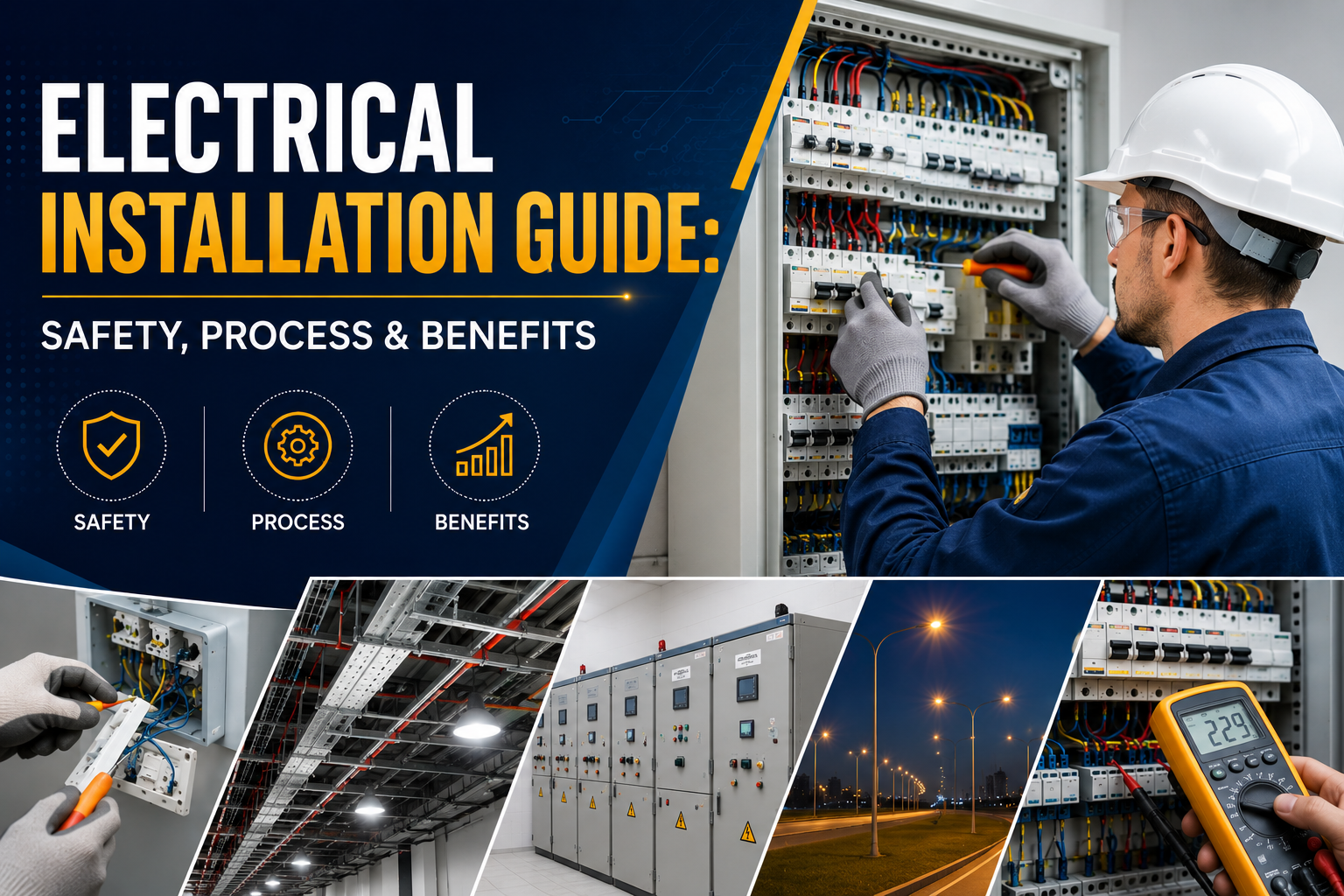
Electricity powers almost every aspect of modern life, from homes and offices to factories and infrastructure projects. A proper electrical installation is essential to ensure safety, efficiency, and long-term reliability. Whether it's a residential setup, industrial facility, or commercial project, understanding the electrical installation process can help property owners make informed decisions.
This Electrical Installation Guide explains everything you need to know, including safety practices, step-by-step processes, and the benefits of professional installation.
1. What is Electrical Installation?
Electrical installation refers to the process of setting up electrical systems, wiring, equipment, and devices to distribute power safely and efficiently. It includes everything from wiring layouts and switchboards to transformers, lighting systems, and an electrical control panel.
In simple terms, electrical installation ensures that electricity reaches all necessary points in a building or industrial site without risk of overload, faults, or accidents. A properly designed and installed electrical system is the foundation of a safe and productive environment.
The process can vary depending on the project type:
- Residential electrical installation
- Commercial electrical installation
- Industrial electrification service
- HT/LT Line Installation
- Street Light Installation Services
- Electrical Control Panel Installation
- Turnkey Electrical Projects
2. Importance of Proper Electrical Installation
Many people underestimate the importance of quality electrical work. Poor wiring or low-quality components can cause major issues such as short circuits, fire hazards, equipment failure, and increased energy consumption.
A well-planned electrical installation provides:
- Safe power distribution
- Reduced maintenance costs
- Improved energy efficiency
- Better system performance
- Compliance with government regulations
Hiring a Government Approved Electrical Contractor ensures the installation follows all required safety standards and local electrical codes.
3. Electrical Installation Safety: Why It Matters
Safety is the most critical part of any electrical setup. Faulty installation can lead to severe risks including electric shocks, fire accidents, and costly damage.
Key Electrical Installation Safety Practices:
- Proper Planning and Design — Before starting any work, load calculations and wiring diagrams should be prepared. This helps avoid overload and future complications.
- Use Quality Materials — Using certified wires, circuit breakers, and electrical components ensures long-term safety and performance.
- Grounding and Earthing — Proper earthing protects both people and equipment from electrical faults.
- Circuit Protection — Installing MCBs, RCCBs, and surge protectors helps prevent overloads and short circuits.
- Regular Inspection — Routine inspections can identify hidden issues before they become dangerous.
- Follow Safety Regulations — Electrical work should comply with government-approved standards to ensure legal and safe operations.
Following electrical installation safety guidelines is essential for every type of project.
4. Electrical Installation Process: Step-by-Step Guide
Understanding the electrical installation process helps in planning projects efficiently. Below is a standard step-by-step approach used by professional contractors.
Step 1: Site Inspection and Requirement Analysis
The first step is understanding the site's electrical needs. Professional contractors evaluate the site and recommend suitable solutions based on:
Key factors assessed during site inspection:
- Power load requirements
- Number of connection points
- Equipment usage
- Future expansion planning
Step 2: Designing the Electrical Layout
After inspection, the electrical layout is prepared. Proper design reduces errors during execution and includes:
Elements of a complete electrical layout:
- Wiring diagrams
- Switchboard positions
- Distribution panel locations
- Transformer placement
- Lighting arrangement
Step 3: Material Selection
Selecting the right materials is important for safety and efficiency. Quality materials increase system durability and typically include:
Commonly used electrical materials:
- Copper cables
- Conduits
- Circuit breakers
- Transformers
- Switchgear
- Electrical control panel systems
Step 4: Wiring Installation
This is the core stage where cables and conduits are installed according to the approved plan. Professional electrical installation ensures proper routing and secure connections. It includes:
- Main power wiring
- Internal wiring
- Lighting wiring
- Machine wiring
Step 5: Installation of Electrical Control Panel
The electrical control panel is the heart of any electrical system. It manages power distribution, protection, and system control. For industrial setups, control panels are especially important and help:
- Manage load distribution
- Prevent overloads
- Control machinery
- Improve operational efficiency
Step 6: Testing and Inspection
Before commissioning, the complete system is tested to ensure everything works safely:
Testing parameters checked before handover:
- Voltage stability
- Load performance
- Insulation resistance
- Earthing continuity
- Circuit breaker functionality
Step 7: Final Commissioning
Once testing is complete, the system is activated and handed over to the client. This marks the successful completion of the electrical installation process.
5. Benefits of Professional Electrical Installation
Hiring experts for electrical work offers several long-term advantages that make it a smart investment for any project.
Key benefits of professional electrical installation:
- Enhanced Safety — Professionals follow proper safety standards, reducing risks of accidents.
- Better Efficiency — Correct wiring and system design improve power efficiency and reduce energy loss.
- Long-Term Reliability — A properly installed system lasts longer and requires less maintenance.
- Cost Savings — Though professional installation may seem expensive initially, it saves money in repairs and energy bills over time.
- Compliance with Regulations — A Government Approved Electrical Contractor ensures the work follows all legal standards.
- Scalability — Professional systems are designed with future expansion in mind.
6. Why Hire an Electrical Contractor?
Electrical work should never be treated as a DIY task. It requires expertise, certifications, and technical knowledge. Attempting electrical work without proper training can result in serious safety hazards and legal complications.
A skilled Electrical Contractor can:
- Design safe and efficient electrical systems
- Install high-quality equipment to industry standards
- Provide ongoing maintenance support
- Handle large-scale industrial electrification projects
- Ensure full compliance with government regulations
For businesses, industries, and government projects, hiring a professional contractor is not just recommended — it is necessary.
7. Choosing the Right Electrical Contractor in Gujarat
If you are planning an electrical project, selecting the right contractor is crucial to ensure quality, safety, and timely completion.
Key factors to check when hiring a contractor:
- Experience and Expertise — Choose a contractor with proven experience in industrial and commercial projects.
- Government Approvals — Always verify if they are a Government Approved Electrical Contractor with valid CEA and GETCO certifications.
- Service Range — Look for contractors who provide complete electrification service, including installation, maintenance, and upgrades.
- Technical Team — A strong technical team ensures quality work and timely project completion.
- Client Reviews — Check previous project success stories and customer feedback before finalizing.
If you are looking for an Electrical Contractor in Ahmedabad, working with experienced professionals ensures better project outcomes and full regulatory compliance.
8. Common Electrical Installation Mistakes to Avoid
Many electrical failures happen because of common mistakes that could have been easily avoided with proper planning and professional expertise.
- Poor load planning — Not accounting for future power needs leads to overloaded circuits.
- Low-quality wiring materials — Cheap cables and components increase the risk of failure and fire hazards.
- Improper earthing — Faulty grounding puts both people and equipment at serious risk.
- Overloaded circuits — Connecting too many devices to a single circuit can cause tripping and damage.
- Incorrect panel installation — A poorly installed control panel can cause system-wide failures.
- Lack of safety testing — Skipping the testing phase before commissioning is a critical and dangerous oversight.
Avoiding these mistakes can significantly improve both the safety and efficiency of your electrical system.
9. Future of Electrical Installation
With growing industries and infrastructure development across India, electrical systems are becoming more advanced, connected, and energy-efficient. The future of electrification is focused on efficiency, safety, and sustainability.
Modern trends shaping the future of electrical installation:
- Smart electrical control panels with automated monitoring
- Energy-efficient systems and green power solutions
- Solar integration for industrial and commercial setups
- Building automation and smart control systems
- IoT-based remote monitoring and diagnostics
Businesses that invest in modern electrical infrastructure today will benefit from reduced operational costs and improved system performance in the years ahead.
Conclusion
A well-executed electrical installation is the backbone of any residential, commercial, or industrial setup. From planning and wiring to installing an electrical control panel and testing, every step matters. Following proper electrical installation safety practices ensures long-term reliability and reduces risks. For businesses and infrastructure projects, choosing an experienced contractor is critical. Sahjanand Engicon LLP provides reliable electrification solutions with a focus on quality, safety, and compliance, helping industries and communities build strong and efficient electrical systems.
10. Frequently Asked Questions (FAQs)
1. What is electrical installation?
Electrical installation is the setup of wiring, panels, and equipment to distribute electricity safely in a building or industrial area.
2. Why is electrical installation safety important?
It prevents electrical shocks, fire hazards, equipment damage, and costly system failures that can disrupt operations.
3. What does an electrical contractor do?
An electrical contractor designs, installs, repairs, and maintains electrical systems for homes, businesses, and industries.
4. What is an electrical control panel?
An electrical control panel manages and controls power distribution, circuit protection, and electrical operations across a facility.
5. Why hire a Government Approved Electrical Contractor?
They ensure compliance with legal regulations, safety standards, and deliver high-quality workmanship on every project.
6. How long does the electrical installation process take?
It depends on project size, complexity, and electrical load requirements. A professional contractor will provide a clear timeline after the site inspection.
7. How do I choose the right electrical contractor in Gujarat?
Check experience, government approvals, service quality, technical expertise, and client reviews before selecting your contractor.
A well-executed electrical installation is the backbone of any residential, commercial, or industrial setup. From planning and wiring to installing an electrical control panel and testing, every step matters. For businesses and infrastructure projects, Sahjanand Engicon LLP provides reliable electrification solutions with a focus on quality, safety, and compliance — helping industries and communities build strong and efficient electrical systems.