
How to Choose a Reliable Industrial Engineering Contractor for Your Project
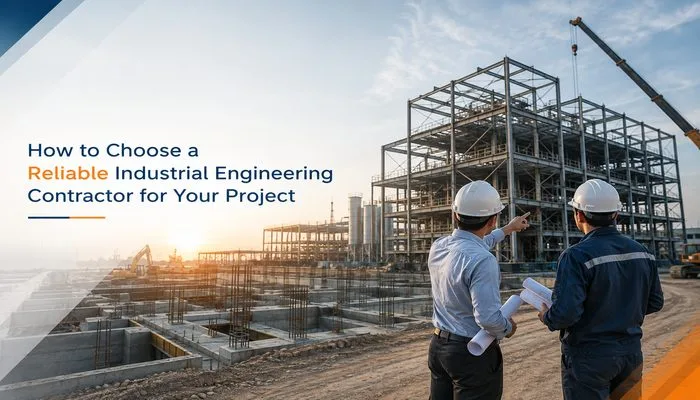
Industrial projects require careful planning, technical expertise, quality materials, skilled execution, and effective project management. Whether you are developing a manufacturing facility, constructing industrial infrastructure, installing structural steel, or setting up a new factory, choosing the right contractor can significantly influence the project's cost, quality, safety, and completion time.
A reliable Industrial Engineering Contractor should be capable of understanding your project requirements and converting engineering plans into practical, safe, and durable infrastructure. From civil construction and foundations to fabrication, factory setup, and project commissioning, the right partner can provide integrated Engineering Services while reducing coordination challenges.
This guide explains the key factors businesses should consider when selecting an Industrial Engineering Contractor for their next project.
What Does an Industrial Engineering Contractor Do?
An Industrial Engineering Contractor provides technical and construction-related solutions for industrial facilities and infrastructure projects. Depending on the project scope, these services may include engineering coordination, civil construction, foundation works, structural fabrication, infrastructure development, factory setup, and turnkey project execution.
Modern industrial projects often involve multiple activities that need to work together. For example, a factory may require civil foundations, structural steel, equipment foundations, electrical infrastructure, utilities, and commissioning. Working with a contractor that understands these interconnected requirements can make project execution more efficient.
Professional Industrial Engineering Services can therefore help project owners coordinate different stages through a structured execution approach.
Why Choosing the Right Contractor Matters
Industrial construction involves substantial investment in land, equipment, materials, manpower, and infrastructure. Poor contractor selection can result in delays, rework, cost overruns, quality problems, or coordination issues between different vendors.
A dependable contractor should demonstrate technical capability, project experience, safety awareness, transparent communication, and the ability to manage the project according to approved drawings and specifications.
Before making a decision, consider the contractor's experience, available resources, previous projects, quality procedures, execution capabilities, and ability to handle your specific requirements.
1. Evaluate Technical Experience
The first step is to assess the contractor's technical experience. Look for a company that has handled projects similar to yours in terms of size, complexity, industry, and construction requirements.
For example, if your project involves industrial foundations, the contractor should understand load requirements, reinforcement, formwork, concrete casting, curing, and site execution. If structural work is required, experience in fabrication, erection, platforms, walkways, and equipment support structures is equally important.
A contractor with relevant experience can identify potential execution challenges earlier and coordinate work more effectively.
2. Check the Range of Engineering Services
Industrial projects rarely involve only one type of construction activity. Therefore, it is beneficial to work with a contractor offering a broad range of Engineering Services.
Depending on your requirements, these may include:
- Civil and RCC foundation works
- Structural steel fabrication and erection
- Infrastructure construction
- Factory setup
- Equipment foundation works
- Utility and electrical infrastructure
- Project planning and execution
- Testing and commissioning
A wider service capability can reduce the need to coordinate multiple independent contractors for interconnected activities.
3. Review RCC Box Culvert Construction Capabilities
Infrastructure and industrial development projects may require drainage crossings, water channels, road crossings, or other structures. In such situations, experience in RCC Box Culvert Construction can be an important factor.
A capable contractor should understand activities such as survey and site preparation, reinforcement fixing, formwork, concrete casting, curing, backfilling, and compaction.
Both precast and cast-in-situ approaches may be considered depending on project requirements, site conditions, design specifications, and construction schedules.
When evaluating a contractor for Box Culvert Construction, ask about previous experience, quality-control procedures, construction methodology, and compliance with approved designs.
4. Assess Steel Fabrication Expertise
Steel structures are widely used in industrial facilities for sheds, platforms, walkways, equipment supports, staircases, and other structural applications.
Therefore, experience in Steel Fabrication Services should be considered when selecting an industrial contractor.
Good fabrication practices involve accurate measurements, appropriate material selection, controlled fabrication, welding quality, dimensional checks, surface treatment where required, and safe site erection.
For projects requiring specialized structures, experience in Industrial Steel Fabrication can be particularly valuable because industrial environments often have specific load, access, operational, and safety requirements.
5. Consider Foundation and Structural Work Experience
Foundations provide the structural base for buildings, machinery, electrical equipment, and other industrial installations. Incorrect foundation execution can affect the stability and long-term performance of the entire project.
When evaluating a contractor, check whether they have experience with different types of industrial foundation requirements, including RCC foundations, equipment foundations, machine foundations, transformer foundations, and structural supports.
The contractor should be capable of executing work according to approved drawings and specifications while maintaining proper reinforcement, concrete quality, dimensions, curing, and site safety.
6. Look for Factory Setup Capabilities
Setting up a new manufacturing facility involves much more than constructing a building. It can include civil works, structural fabrication, equipment foundations, electrical infrastructure, utilities, internal development, and commissioning.
This is why Factory Setup Services can be an important consideration for businesses developing a new industrial facility.
A contractor with experience in Industrial Factory Setup should be able to coordinate multiple project activities and maintain communication between engineering, procurement, construction, vendors, and site teams.
Depending on the project scope, services may include:
- Industrial project planning
- Civil construction
- RCC foundation works
- Structural steel fabrication and erection
- Plant and machinery foundations
- Electrical infrastructure
- Transformer and substation installation
- Testing and commissioning
7. Consider a Turnkey Approach
A Turnkey Contractor takes responsibility for multiple stages of project execution under a coordinated scope. Instead of managing several contractors independently, the project owner can work with one primary contractor responsible for defined deliverables.
This approach can simplify communication, improve coordination, and create clearer accountability.
For companies planning projects across different regions, selecting an experienced Turnkey Contractor India can also be useful when the contractor has the resources and execution capabilities required for multi-location projects.
However, always review the exact scope of work before awarding a turnkey contract. Make sure responsibilities, specifications, timelines, quality requirements, testing procedures, and handover conditions are clearly documented.
8. Verify Quality and Safety Practices
Industrial construction requires strong attention to safety and quality. Before selecting a contractor, ask about their quality-control procedures, site safety practices, workforce capabilities, inspection processes, and documentation.
A professional contractor should follow approved drawings, project specifications, applicable standards, and appropriate site safety procedures.
Quality should be monitored throughout execution rather than checked only after the work is completed. Regular inspections and documentation can help identify issues early and reduce costly rework.
9. Review Project Planning and Execution Capability
Even technically capable contractors can face difficulties if project planning is weak. Ask how the contractor manages procurement, manpower, equipment, subcontractors, construction sequences, inspections, and project milestones.
An effective project execution plan should establish clear responsibilities and timelines for each major activity.
For complex projects, coordination between civil, structural, electrical, mechanical, and utility activities is especially important. Good planning helps different teams work without unnecessary interference or delays.
10. Check Local Expertise and Project Reach
If your project is located in Gujarat, working with an experienced Engineering Contractor in Gujarat can provide practical advantages such as familiarity with local project conditions, vendors, manpower availability, and regional execution requirements.
At the same time, companies undertaking projects outside Gujarat should evaluate whether the contractor has the operational capacity to execute projects across different locations.
The ideal contractor should combine local knowledge with the technical and organizational capability needed for larger industrial projects.
Conclusion
Choosing the right Industrial Engineering Contractor is an important decision that can directly affect the quality, safety, cost, and timeline of an industrial project. Businesses should look beyond pricing and evaluate technical expertise, relevant project experience, quality systems, safety practices, project management capabilities, and the range of services offered.
A contractor capable of providing Industrial Engineering Services in Gujarat and other regions, along with civil foundations, RCC box culverts, steel fabrication, factory setup, and turnkey execution, can provide a more coordinated approach to complex projects.
For businesses seeking an experienced partner for industrial engineering, infrastructure, fabrication, foundation, and factory development requirements, Sahjanand Engicon LLP provides integrated engineering and turnkey project solutions with a focus on quality, safety, coordination, and timely execution.