
Industrial Electrical Installation: A Complete Guide for Factories and Manufacturing Plants
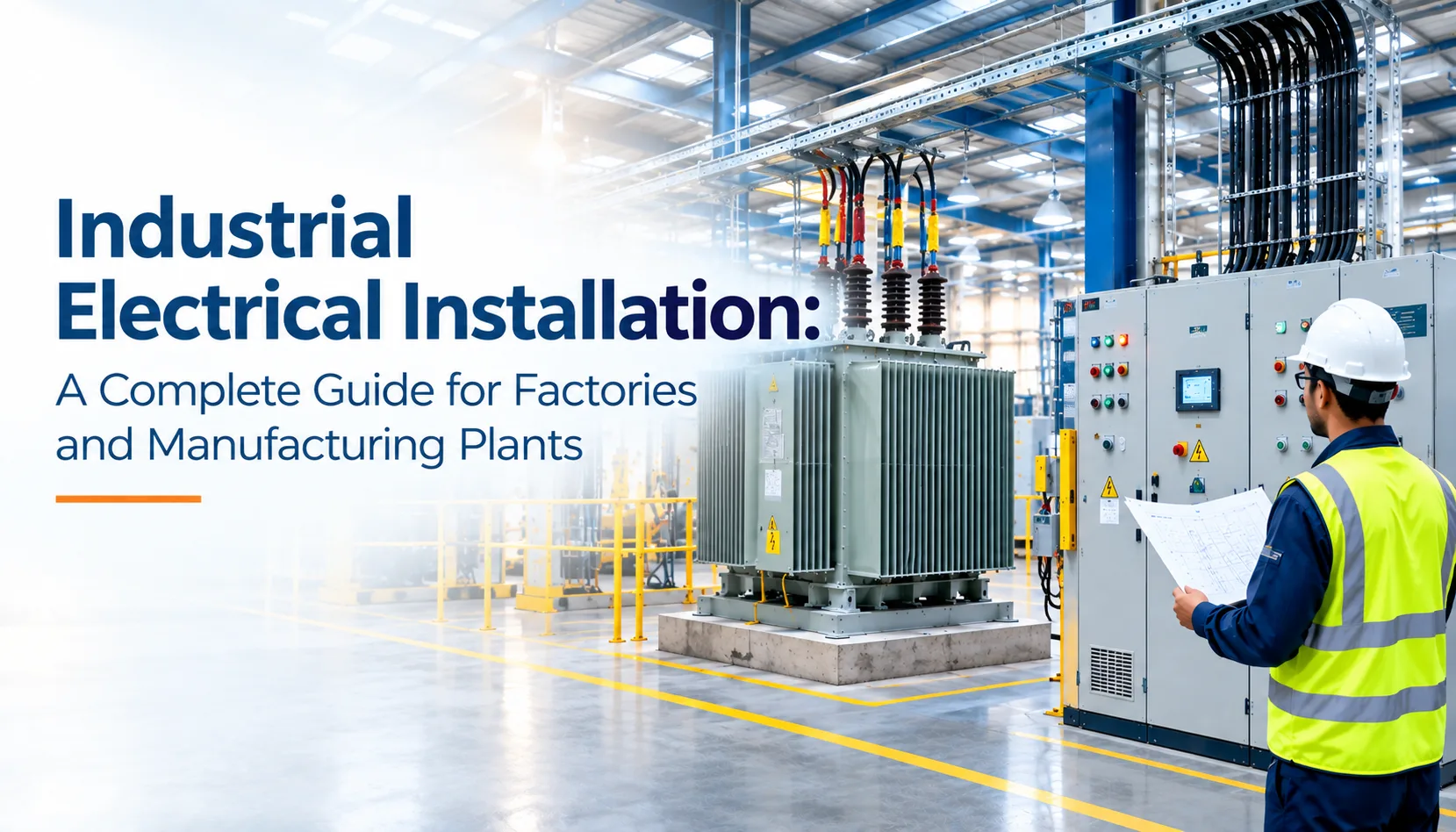
Modern factories and manufacturing plants depend on a safe, reliable, and well-planned electrical system to keep production running smoothly. From power distribution and transformers to electrical panels, cabling, earthing, and testing, every part of an industrial electrical system needs proper planning and execution.
Industrial Electrical Installation involves the installation, integration, testing, and commissioning of electrical infrastructure required to operate industrial facilities. A well-designed system can support machinery, production lines, lighting, control equipment, and other plant operations while providing a strong foundation for future expansion.
For factories planning a new facility, plant expansion, or electrical system upgrade, understanding the major stages and components of industrial electrical installation can help with better project planning and execution.
What Is Industrial Electrical Installation?
Industrial Electrical Installation refers to the complete process of setting up electrical infrastructure within a factory, manufacturing plant, warehouse, or other industrial facility.
Unlike basic commercial electrical work, industrial projects often involve higher power requirements, large machinery, complex distribution networks, transformers, electrical panels, control systems, and extensive cabling.
Depending on the project requirements, industrial electrical installation may include:
- HT and LT electrical systems
- Transformer and substation installation
- HT/LT cable laying and termination
- Electrical distribution panels
- Earthing systems
- Industrial lighting
- Control and automation panels
- Electrical equipment installation
- Testing and commissioning
A properly planned electrical system helps distribute power efficiently to different areas of a plant and supports safe and continuous operations.
Key Components of Industrial Electrical Installation
Industrial electrical projects involve several interconnected components. Each component needs to be selected and installed according to the plant's electrical load, layout, equipment requirements, and operating conditions.
1. Electrical Power Distribution
The power distribution system transfers electricity from the incoming supply to different sections of the plant. It can include HT equipment, transformers, LT distribution panels, cables, feeders, and protection systems.
Proper distribution planning is important because different machines and production areas may have different electrical loads.
2. Transformer Installation
Transformers play an important role in industrial power distribution by changing voltage levels as required by the electrical system.
Professional Transformer Installation Services may include transformer placement, associated electrical connections, testing, and commissioning as part of the overall project scope.
The transformer arrangement should be planned according to the required capacity, electrical load, site conditions, and distribution requirements.
3. Electrical Panels
Electrical panels distribute and control electrical power throughout an industrial facility. Depending on the application, a plant may require different types of power and control panels.
These can include:
- Power Control Centre (PCC) panels
- Motor Control Centre (MCC) panels
- Distribution boards
- Control panels
- APFC panels
- Automation-related panels
Proper panel selection, installation, wiring, inspection, and testing are important for reliable plant operations.
4. Industrial Cabling
Cables connect transformers, panels, machinery, control systems, and other electrical equipment.
Industrial cable installation can involve HT cables, LT power cables, control cables, cable trays, conduits, and suitable termination systems. Cable routing should be planned carefully to support accessibility, safety, maintenance, and future modifications.
5. Earthing and Electrical Safety
Earthing is an important part of an industrial electrical system. It provides a path for fault currents and supports the operation of electrical protection systems.
The earthing arrangement should be designed and installed according to the project's technical requirements and applicable electrical regulations.
Factory Electrification Services: Key Stages
Factory electrification requires coordination between electrical design, equipment installation, cabling, testing, and commissioning.
Professional Factory Electrification Services can cover the electrical infrastructure required from the incoming power supply through to plant-level distribution.
Electrical Load Assessment and Planning
The project begins with understanding the plant's electrical requirements. Machinery, production equipment, lighting, HVAC systems, utilities, and other loads need to be considered during planning.
Accurate load information helps engineers determine appropriate transformer capacity, panel requirements, cable sizes, and distribution arrangements.
Electrical Design and Layout
Electrical engineers develop the required drawings and layouts based on the project requirements. This may include Single Line Diagrams (SLDs), equipment layouts, cable routes, panel locations, and other project documentation.
Good planning can also make future maintenance and plant expansion easier.
Equipment and Material Selection
Transformers, panels, cables, switchgear, protection equipment, earthing materials, and other components should be selected according to the electrical design and project specifications.
Equipment selection should consider factors such as electrical ratings, environmental conditions, operational requirements, and applicable standards.
Installation and Cable Laying
Once planning and material selection are completed, installation activities can begin. These may include transformer and panel installation, HT/LT cable laying, cable termination, earthing, and electrical equipment installation.
Testing and Commissioning
Testing and commissioning help verify that installed equipment and systems are functioning as intended before the plant becomes operational.
Testing may cover electrical connections, insulation, earthing, protection systems, panels, transformers, and other project-specific equipment.
Importance of Plant Electrification Services
Plant Electrification Services are essential for new manufacturing facilities as well as plant expansions and modernization projects.
A properly planned plant electrical system can help provide:
- Reliable power distribution
- Better electrical safety
- Organized equipment connections
- Easier maintenance
- Support for production machinery
- Flexibility for future expansion
For large industrial projects, electrical infrastructure should be considered during the early stages of plant planning rather than treated as a separate activity at the end of construction.
Electrical Control Panel Installation in Industrial Plants
Electrical control panels are used to distribute, control, monitor, or manage electrical equipment and industrial processes.
Electrical Control Panel Installation may involve positioning panels, connecting incoming and outgoing cables, completing control wiring, checking connections, and carrying out project-specific testing.
For example, MCC panels can be used for motor-related loads, while PCC panels are generally used for main power distribution. The appropriate panel configuration depends on the plant's electrical design and operational requirements.
Panel installation should also consider accessibility, ventilation, cable routing, protection, labeling, and maintenance requirements.
Role of an Industrial Electrical Contractor
Selecting an experienced Industrial Electrical Contractor can simplify the execution of a complex factory electrical project.
An industrial contractor may coordinate activities such as:
- Electrical planning and drawings
- HT/LT installation
- Transformer and substation work
- Cable laying and termination
- Electrical panel installation
- Earthing systems
- Testing and commissioning
A single coordinated electrical contractor can also help reduce communication gaps between different installation teams.
How to Plan a Successful Industrial Electrical Project
Before starting an electrical installation project, project teams should clearly define the electrical scope, plant capacity, equipment requirements, site conditions, and project timeline.
The following considerations can help improve project planning:
Understand the Electrical Load
Prepare an accurate load list covering machinery, production equipment, lighting, utilities, and future requirements.
Plan for Future Expansion
If the plant is expected to expand, the electrical infrastructure should be planned with reasonable flexibility for additional loads and equipment.
Coordinate Electrical and Civil Works
Transformer foundations, cable trenches, equipment rooms, panel locations, and other requirements should be coordinated with civil and structural work.
Prioritize Testing and Documentation
Testing records, drawings, equipment information, and commissioning documentation should be maintained as part of project handover.
Benefits of Professional Electrical Installation Services
Professional electrical planning and execution can provide several practical benefits to industrial facilities.
Improved Reliability
Properly designed distribution systems can support consistent power supply to plant equipment and production areas.
Better Safety
Correct installation, protection, earthing, testing, and maintenance practices can help reduce electrical risks.
Easier Maintenance
Organized cable routes, properly installed panels, clear labeling, and accurate documentation can make future maintenance easier.
Support for Plant Growth
A well-planned electrical system can provide a foundation for future machinery additions, production expansion, and infrastructure upgrades.
Conclusion
A reliable electrical system is one of the most important parts of a factory or manufacturing plant. From transformer installation and power distribution to panels, cabling, earthing, testing, and commissioning, each stage requires careful planning and professional execution.
Whether it is a new factory, plant expansion, or electrical infrastructure upgrade, choosing the right Industrial Electrical Contractor and planning the project around actual operational requirements can help create a safe and dependable electrical system.
Sahjanand Engicon provides Industrial Electrical Installation, factory and plant electrification, transformer-related electrical work, panel installation, and other electrical infrastructure solutions for industrial and infrastructure projects across India.