
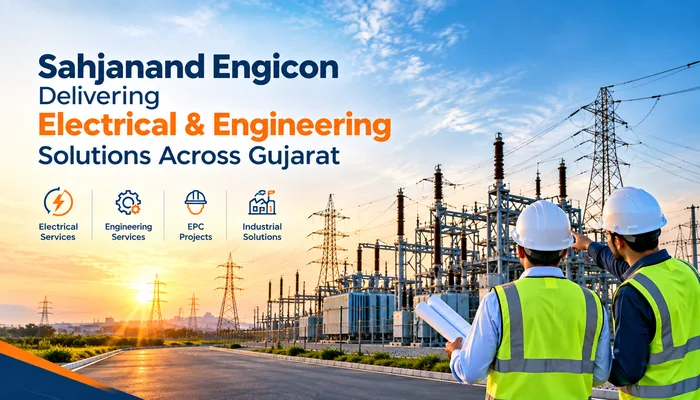
Sahjanand Engicon: Delivering Electrical & Engineering Solutions Across Gujarat
Gujarat is one of India’s leading industrial and infrastructure hubs, with rapidly developing manufacturing facilities, commercial projects, transportation networks, renewable energy projects, and urban infrastructure. As projects become more technically demanding, businesses need reliable partners who can manage electrical, engineering, and construction requirements with precision.
A professional Electrical Contractor in Gujarat can help organizations plan, install, test, and maintain electrical infrastructure while ensuring safety and compliance. At the same time, specialized engineering and EPC capabilities can simplify complex projects by bringing design, procurement, construction, installation, and commissioning together.
From industrial electrification and HT/LT line works to engineering, transformer installation, and turnkey project execution, integrated service providers play an important role in supporting Gujarat's growing infrastructure.
The Growing Need for Integrated Electrical & Engineering Solutions
Modern industrial and infrastructure projects involve multiple technical disciplines. Electrical systems must work together with civil structures, machinery, utilities, control systems, and other project components.
This is why businesses increasingly look for Electrical & Engineering Solutions in Gujarat from experienced contractors rather than coordinating several independent vendors.
An integrated approach can help with:
- Project planning and technical design
- Electrical installation and distribution
- HT and LT infrastructure
- Transformer and substation installation
- Industrial engineering
- Equipment erection
- Testing and commissioning
- Procurement and material coordination
- Complete EPC project execution
A coordinated execution model can reduce communication gaps and help maintain better control over project timelines, quality, and safety.
Electrical Contracting for Industrial and Infrastructure Projects
Electrical infrastructure is one of the most critical components of an industrial facility. From power distribution to equipment connections, every system must be designed and installed according to the project's technical requirements.
An experienced Electrical Contractor in India can support projects ranging from industrial plants and commercial facilities to infrastructure, railway, utility, and public-sector developments.
Typical electrical contracting activities include:
- Electrical system planning
- Cable laying and termination
- Panel installation
- Distribution systems
- Earthing and protection systems
- Lighting systems
- HT/LT line erection
- Transformer installation
- Testing and commissioning
Professional execution is particularly important for industrial facilities because electrical problems can affect production, equipment safety, and operational continuity.
Electrical Installation Services for Reliable Power Systems
Well-planned Electrical Installation Services provide the foundation for a safe and efficient electrical network. Installation work may include cables, panels, transformers, distribution equipment, lighting systems, earthing networks, and associated infrastructure.
Industrial projects often require detailed planning before installation begins. Load calculations, single-line diagrams, equipment specifications, cable sizing, routing, and protection requirements need to be considered during the engineering stage.
The installation process generally involves:
- Site survey and requirement assessment
- Electrical system design
- Preparation of drawings and technical documentation
- Material procurement
- Equipment and cable installation
- Testing and inspection
- Commissioning and handover
A structured approach helps ensure that the installed system meets project requirements and can operate safely.
HT/LT Electrical Works and Power Distribution
Power distribution is a major requirement for factories, commercial facilities, infrastructure projects, and utility installations. HT/LT Electrical Works may include high-tension and low-tension line erection, cable laying, substations, electrical panels, and distribution networks.
HT systems are generally used for higher-voltage power transmission and distribution, while LT systems distribute electrical power to equipment, machinery, lighting, and other loads within a facility.
Proper coordination between HT and LT systems is important for:
- Electrical safety
- Reliable power distribution
- Equipment protection
- Operational continuity
- Efficient maintenance
Projects involving HT/LT systems require qualified professionals, suitable equipment, appropriate protection systems, and systematic testing before energization.
Transformer Installation Services
Transformers are essential components of many industrial and commercial power systems. They help convert electrical energy between different voltage levels to suit transmission and utilization requirements.
Transformer Installation Services can involve transformer foundation preparation, transportation and positioning, installation, cable connections, earthing, protection systems, testing, and commissioning.
Before energization, the installation should be inspected and tested according to the applicable project requirements. Proper transformer installation can help improve system reliability and reduce operational risks.
Transformer installation is often integrated with substation development and HT/LT distribution infrastructure, making coordination between electrical engineering and site execution particularly important.
Industrial Engineering Services for Project Development
Electrical systems are only one part of a modern industrial project. Civil structures, foundations, fabrication, machinery installation, utilities, and project planning also need to be coordinated.
Professional Industrial Engineering Services can support businesses throughout different stages of industrial development.
These services may include:
- Industrial project planning
- Engineering design and drafting
- Technical documentation
- Load calculations
- Foundation works
- Structural fabrication
- Equipment erection
- Factory setup
- Utility installation
- Testing and commissioning
An integrated engineering approach can help ensure that different project components are developed according to a common execution plan.
Role of an Industrial Electrical Contractor
An Industrial Electrical Contractor works specifically with the electrical requirements of industrial facilities and large-scale projects. Industrial environments can involve heavy machinery, high electrical loads, complex distribution systems, and demanding operating conditions.
Industrial electrical contracting may include factory electrification, HT substations, LT distribution, electrical panels, cable laying, earthing, lighting, equipment connections, and testing.
Working with an experienced contractor can also help project owners coordinate engineering, procurement, installation, and commissioning activities through a structured workflow.
EPC Company in India: From Engineering to Execution
EPC stands for Engineering, Procurement and Construction. Under the EPC model, the contractor manages major project activities through an integrated execution framework.
An experienced EPC Company in India can coordinate engineering design, procurement, construction, installation, testing, commissioning, and handover.
The three primary stages are:
Engineering
The engineering stage establishes the technical foundation of the project. It may include surveys, calculations, drawings, specifications, layouts, and project planning.
Procurement
Procurement involves sourcing approved materials, equipment, and other resources required for project execution. Quality checks and delivery planning are important for maintaining project schedules.
Construction
The construction stage involves site execution, installation, erection, testing, and coordination of different project activities.
The objective is to create a coordinated project workflow rather than treating each activity as an isolated task.
Industrial EPC Contractor for Complex Projects
An Industrial EPC Contractor can be particularly useful when a project involves multiple engineering and construction disciplines.
Industrial EPC projects may include electrical infrastructure, civil works, structural fabrication, equipment installation, factory setup, utilities, and commissioning.
A structured EPC process generally follows these stages:
Project Planning → Engineering & Design → Procurement → Installation & Construction → Testing & Commissioning → Handover
This approach provides a single execution framework and can make project coordination easier for owners and project management teams.
Engineering Procurement Construction: A Complete Project Approach
Engineering Procurement Construction combines three major project functions under one coordinated model.
Instead of managing engineering consultants, suppliers, construction contractors, and commissioning teams separately, an EPC model allows major responsibilities to be managed through a unified project structure.
The key benefits can include:
- Better coordination
- Centralized project responsibility
- Streamlined procurement
- Integrated engineering and construction
- Improved schedule management
- Easier project communication
- Coordinated testing and commissioning
The effectiveness of an EPC project depends on proper planning, technical expertise, procurement management, quality control, safety practices, and site execution.
Turnkey EPC Contractor for End-to-End Execution
A Turnkey EPC Contractor provides an end-to-end project execution model in which the contractor manages the project from initial planning through completion and handover.
For industrial and infrastructure projects, turnkey execution can cover engineering, procurement, civil works, electrical installation, equipment erection, testing, commissioning, documentation, and final handover.
This model can be suitable for organizations looking for a single point of coordination for complex projects.
Why Quality and Safety Matter in Electrical Engineering Projects
Electrical and engineering projects require careful attention to safety and quality at every stage. Poor installation practices, inadequate testing, incorrect equipment selection, or weak coordination can create operational and maintenance challenges.
Important considerations include:
- Compliance with applicable standards
- Proper equipment selection
- Skilled manpower
- Quality materials
- Electrical testing
- Safe installation procedures
- Documentation and inspection
- Proper commissioning
Quality control should begin during engineering and procurement rather than only during final inspection.
Supporting Gujarat's Industrial and Infrastructure Growth
Gujarat continues to develop across manufacturing, industrial, transportation, commercial, energy, and infrastructure sectors. These developments create an ongoing requirement for reliable electrical and engineering capabilities.
From industrial electrification and HT/LT infrastructure to structural works and EPC execution, integrated project delivery can help businesses manage increasingly complex technical requirements.
A capable contracting partner should understand not only electrical installation but also the broader relationship between engineering, construction, procurement, safety, and commissioning.
Frequently Asked Questions
1. What does an electrical contractor do?
An electrical contractor plans, installs, tests, and commissions electrical systems for different types of projects. Services can include cabling, panels, lighting, HT/LT systems, transformers, earthing, and electrical distribution.
2. What are Electrical Installation Services?
Electrical Installation Services cover the installation of electrical equipment and infrastructure such as cables, panels, distribution systems, lighting, transformers, earthing systems, and related components.
3. What is the difference between HT and LT electrical works?
HT systems operate at higher voltage levels and are commonly associated with power transmission and distribution, while LT systems distribute electrical power to equipment, machinery, lighting, and other end-use loads.
4. What does an EPC Company in India provide?
An EPC Company in India can manage engineering, procurement, construction, installation, testing, commissioning, and project handover under an integrated execution model.
5. Why are transformer installation services important?
Transformers are essential for changing voltage levels within electrical power systems. Proper installation, testing, protection, and commissioning are important for safe and reliable operation.
6. What is a turnkey EPC project?
A turnkey EPC project is an end-to-end project delivery model where the contractor manages major activities from engineering and procurement through construction, testing, commissioning, and handover.
7. What industries require industrial engineering services?
Manufacturing plants, process industries, power projects, infrastructure developments, commercial facilities, warehouses, and other industrial developments can require specialized engineering services.
Conclusion
Reliable electrical and engineering infrastructure is essential for the successful development of industrial and infrastructure projects. From electrical installation and HT/LT works to transformer installation, industrial engineering, and complete EPC execution, an integrated approach can improve coordination and support efficient project delivery.
Sahjanand Engicon LLP provides electrical, engineering, and EPC capabilities for industrial, commercial, railway, infrastructure, and other projects. With services covering electrical installation, HT/LT line works, transformer and substation installation, engineering, fabrication, and turnkey EPC execution, the company supports projects from planning and engineering through testing, commissioning, and handover across Gujarat and India.